

A few days ago I was visiting my English cousin. As often happens when a French woman and a Brit spend enough time together, the conversation turned to the Royal Family. She asked what I thought about Harry and Meghan.
I laughed:
« You have to remember, I’m French. We don’t quite share your emotional attachment to the monarchy. »
Then added,
« Besides… we dealt with that particular issue rather decisively a couple of centuries ago. »
We both laughed.
But the conversation stayed with me because it made me think about something much older than the British monarchy.
Every court had ministers, advisers, generals and ambitious courtiers. They all had something to lose. Their position, influence and reputation depended on staying in the King’s favor.
And then there was the Fool
History remembers the bells and the jokes. His real role was far more important.
The Fool wasn’t there to entertain the King. He was there to protect him from the one thing power inevitably creates: blindness.
The closer you are to power, the harder it becomes to speak freely. Not because people are dishonest, but because every system rewards diplomacy, loyalty and self-preservation. Reality doesn’t disappear. It simply becomes filtered.
Power never changes, only the buildings do
Swap the castle for a glass office tower and the Court is still there: executives, managers, consultants, politics, alliances, departments protecting their budgets. People choosing their words carefully because careers are built, or broken, in that room.
Every organisation has a Court. Very few still have a Fool.
For years I’ve struggled to explain what I do. Saying that I’m a graphic facilitator, or that I « draw meetings », has always felt technically correct and fundamentally false.
The real work begins when I walk into a room without belonging to it.
As an independent facilitator, I work neither for nor against the CEO. I have no department to defend, no promotion to chase and no interest in one narrative winning over another.
That independence changes your attention. You stop listening for arguments and start listening for patterns. You notice what isn’t being said. You notice when people defend opposite positions while wanting the same thing. You notice when the room has already moved on but the conversation hasn’t.
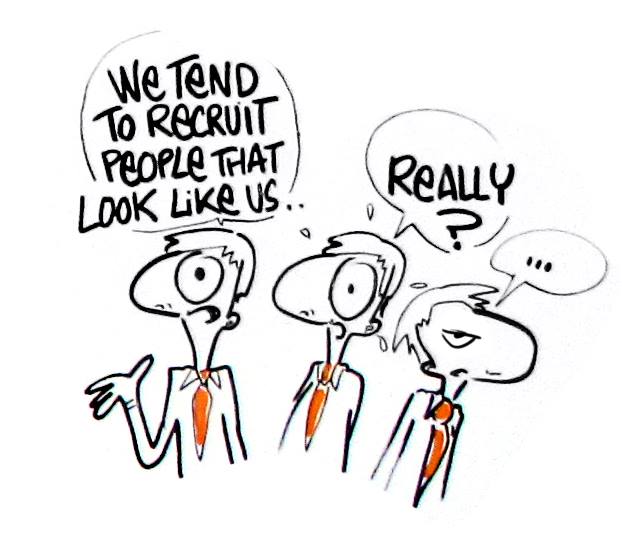
My job isn’t to add another opinion, but to make the whole system visible to itself.
I’m not recording a meeting, I’m holding up a mirror. And a good mirror doesn’t flatter, accuse or take sides. It reflects reality honestly enough for people to recognize what they couldn’t see while standing inside it.
That is the real inheritance of the King's Fool: his loyalty wasn't to the King's ego but... to reality
Perhaps that’s still the role of independent facilitators. Not to decorate conversations.
Our first responsibility is much simpler, and much harder: to create a space where a group can see itself, safely and clearly.
Organisations rarely fail through lack of intelligence. They fail because, somewhere along the way, nobody is left who can safely tell the truth.
Or draw it!